

Spotify Bot Checker: How to Spot Fake Playlists and Streams in 2026
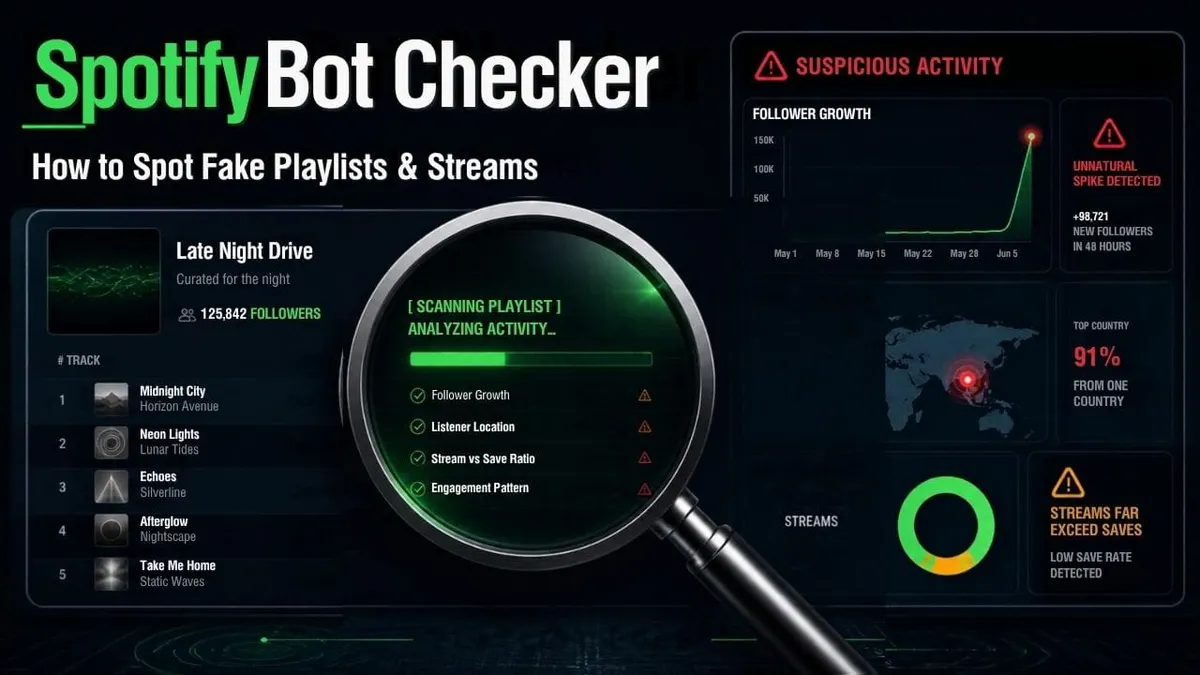
Getting added to a Spotify playlist can feel like a breakthrough. Your streams jump, new listeners appear, and suddenly it looks like your release is gaining traction. But not every spike represents genuine discovery.
Bot playlists on Spotify use artificial, manipulated, or otherwise inauthentic listening activity to inflate stream counts. Some questionable promotion services make these playlists look convincing with professional artwork, large follower counts, and familiar artists.
At Playlist Push, this comes as no surprise; we have been fighting and weeding out fake/botted playlists since late 2018.
Every playlist that applies to our network is scanned by an algorithm and manually verified by a human to determine whether it has real listeners.
Fake Spotify playlists can look legitimate at first glance. They may have thousands of followers, professional artwork, and a steady stream of new artists, but the listeners behind them may not be real.
A Spotify bot checker or Spotify playlist analyzer can help uncover suspicious activity, but you can also identify many warning signs yourself. In this guide, we'll show you how to check a Spotify playlist for bots, what fake streaming activity looks like in Spotify for Artists, and which tools can help you investigate a playlist before paying for promotion.
Quick Answer: How Can You Tell If a Spotify Playlist Uses Bots?
A suspicious Spotify playlist often looks impressive on the surface but falls apart when you examine the details.
Look for a combination of these warning signs:
- A large playlist with little or no identifiable curator presence
- Generic or unrelated tracks that don't match the playlist theme
- Guaranteed stream promises
- Sudden streaming spikes with very little corresponding engagement
- Unexpected listener locations with no obvious reason
- Traffic that starts and stops with unusual precision
None of these signals alone proves that bots are involved. A legitimate playlist can create an unusual spike, and plenty of real Spotify users have basic profiles or strange usernames.
The key question is whether the playlist, curator, audience, and resulting streaming behavior tell a believable story together.
Why Fake Spotify Streams Are a Problem
Real promotion should create discovery. A bigger number on your dashboard doesn't necessarily mean your audience is growing.
A smaller campaign that reaches 1,000 genuinely interested listeners may be far more valuable because those people can become repeat listeners and fans.
Imagine that a promotion generates 20,000 plays, but almost nobody saves your track, follows your profile, or listens to another song. The number looks impressive, yet you've learned very little about your real audience.
But another problem is that fake streams give you bad marketing data. Spotify has historically prohibited artificial streaming and play-count manipulation, so artists should be extremely cautious about services that sell guaranteed streams. Depending on the circumstances, suspicious activity can result in streams or royalties being adjusted and may create issues with distributors or other partners. Artificial streams can create more trouble than value.
Are your Spotify monthly listeners dropping? Don't use bots to combat it, read our guide to learn why your monthly listeners are dropping and the best ways to fix it.
Step 1: Check the Playlist Curator and Profile
Start by looking at who runs the playlist.
Open the curator's Spotify profile and examine their other playlists. Do they have clear themes? Does the account look actively maintained? Is there any sign of a real curator, music brand, publication, label, community, or creator behind it?
A curator doesn't need a polished website or thousands of social followers to be legitimate. Many excellent playlists are maintained by individual music fans.
You're looking for consistency.
Be more cautious when an account controls numerous nearly identical playlists with generic names, vague descriptions, repetitive artwork, and no obvious identity behind them.
Follower counts should also be treated carefully. A playlist having 30,000 followers doesn't tell you how active those followers are or whether they regularly listen.
Don't Rely on Strange Followers Alone
Older guides often treated unusual usernames, default profile pictures, or inactive-looking accounts as proof of bots.
Those can still be clues, but they're weak evidence by themselves. Plenty of genuine Spotify listeners never customize their profiles.
Instead, look at the broader pattern.
Does the playlist claim a huge audience despite having almost no visible history or presence? Are there dozens of similar playlists attached to the same anonymous account? Does everything look mass-produced?
One strange detail means very little. Several inconsistencies appearing together deserve closer attention.
Step 2: Look at the Songs on the Playlist
The music itself can reveal a lot.
If a playlist is called "Indie Pop Discoveries," its songs should generally make sense together. Variety is fine, but a playlist that jumps randomly between death metal, meditation tracks, country, children's music, and electronic dance music is hard to explain as normal curation.
Look at the artists too.
A healthy playlist often mixes artists of different sizes while maintaining a recognizable genre, mood, activity, or audience. A suspicious playlist may instead look like a few songs from top 50 artists + a collection of completely unrelated independent musicians who all happened to purchase promotion.
The playlist should feel curated rather than filled.
The songs your song is in a playlist with matter, as it can affect your "Fans Also Like" section. Check out this article to learn how to get better artists in your "Fans Also Like" section
Step 3: Use Your Spotify Data as a Stream Checker
Your Spotify for Artists analytics can also function as a basic Spotify stream checker. After a playlist placement, compare the resulting traffic with your normal performance and look at streams, listeners, saves, geography, and whether people begin exploring other songs in your catalog.
Genuine listeners behave unpredictably.
Some play once. Some skip. Some save the song. A few follow you or listen to another release. Real audience behavior tends to contain variation.
Artificial traffic may look much more mechanical.
For example, suppose your song normally gets 100 daily streams and suddenly jumps to several thousand. That isn't automatically a problem. You might have landed on a popular playlist or benefited from a viral social post.
Instead, ask what happened alongside the increase.
Did unique listeners rise? Did you gain saves or followers? Does the listener location make sense? Can you trace the spike back to an identifiable playlist or campaign?
Also avoid relying on supposed "perfect" stream-to-listener ratios. Different types of music naturally create different listening behavior. Workout, sleep, background, discovery, and pop playlists can all produce very different patterns.
Look at the whole dataset rather than one number.
Step 4: How to Use a Spotify Bot Checker or Playlist Analyzer
You don't have to investigate every playlist manually. Several third-party tools act as a Spotify playlist analyzer or Spotify bot checker, using public and historical data to highlight patterns that may indicate artificial activity.
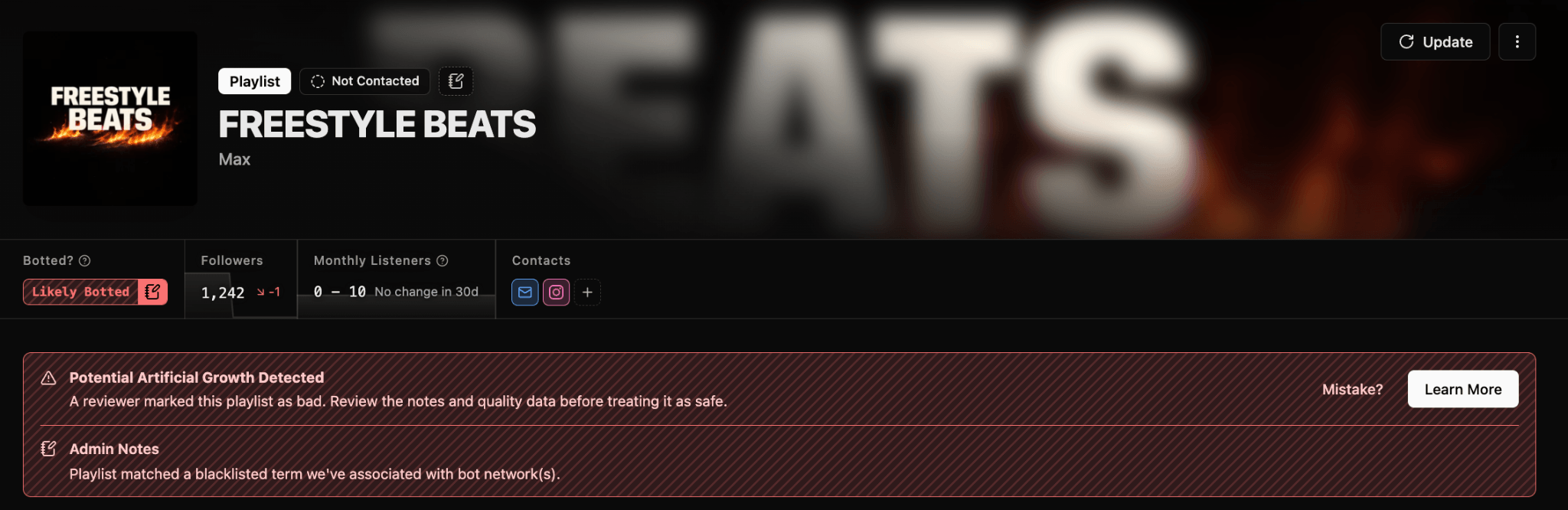
One of the most useful tools we've found is Artist.Tools. It analyzes signals such as playlist follower growth, listener locations, artist data, and historical activity to help determine whether a playlist looks suspicious. This can be particularly useful when a playlist has impressive-looking follower numbers, but you're unsure whether its audience is genuine.
Another option is the Spotify Playlist Analyzer from Is It a Good Playlist. Tools like these can give you extra context before you submit your music or pay a company for playlist promotion.
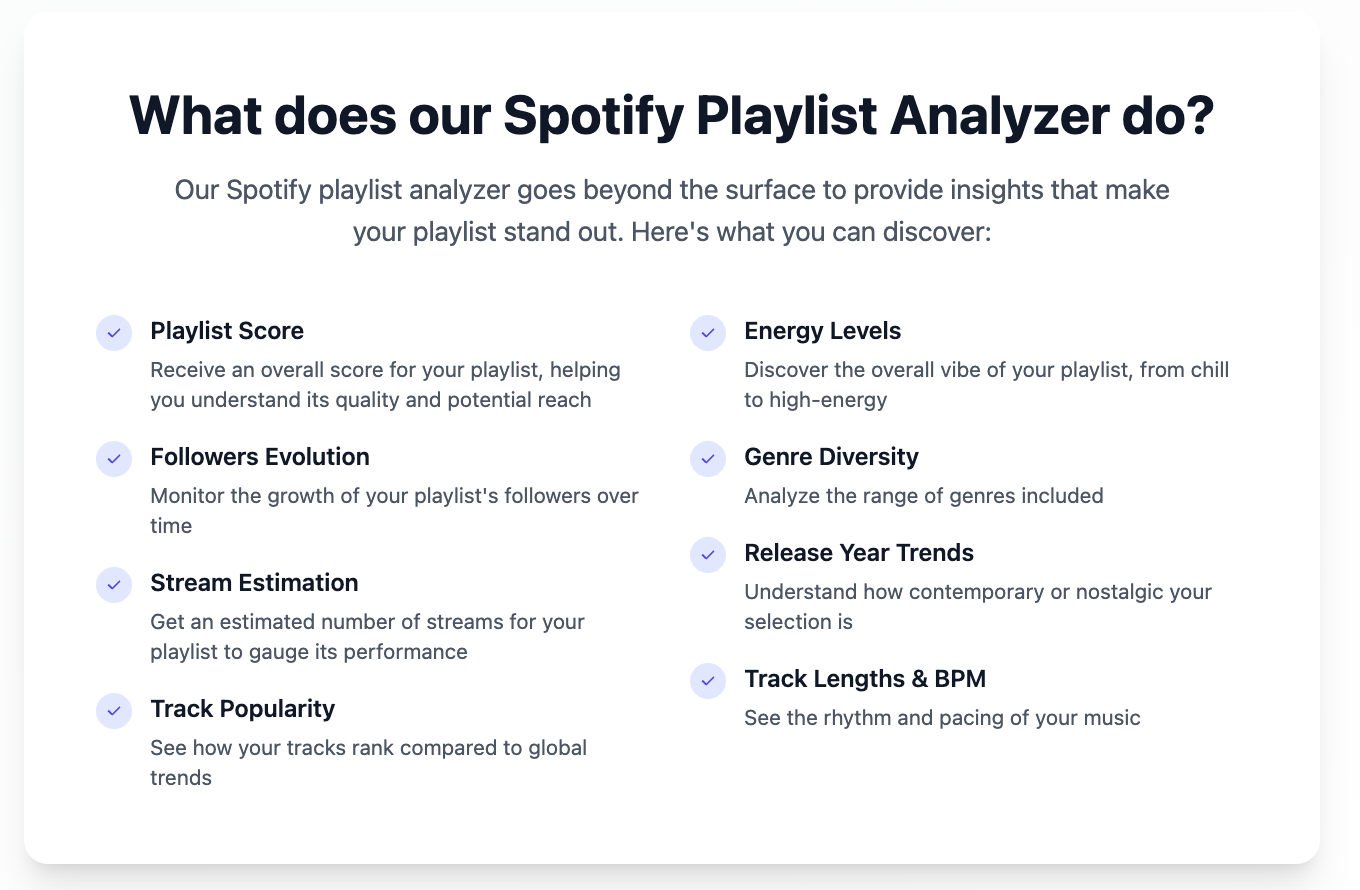
Think of these tools as a second opinion rather than a definitive verdict. A playlist analyzer may flag unusual follower growth or streaming patterns, but no outside tool can know with absolute certainty whether every listener is real. Combine the tool's findings with the manual checks in this guide: curator history, track selection, follower patterns, listener geography, and your own Spotify for Artists data.
Step 5: Be Skeptical of Guaranteed Spotify Streams
The easiest bot playlist to avoid is the one you never pay for.
Be especially careful with promotion services selling packages such as:
"10,000 guaranteed Spotify streams for $50."
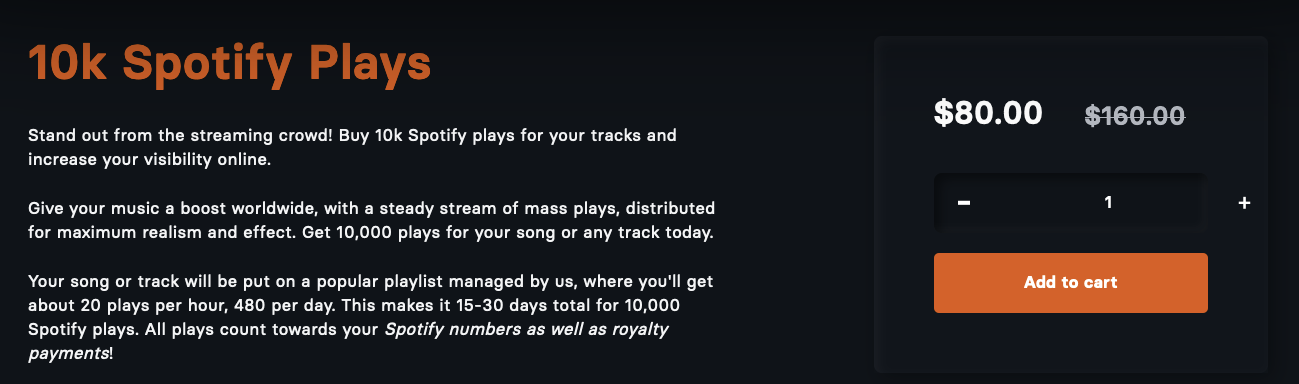
A legitimate marketer can guarantee the work they perform. They can guarantee that they'll run an advertising campaign, review a submission, pitch your song, or contact potential curators.
They cannot reasonably guarantee exactly how thousands of independent listeners will behave.
The same applies to promises of guaranteed virality.
Before paying for Spotify promotion, find out what you're actually buying. Who runs the company? How does the promotion work? Where do listeners come from? Is there real customer support? What happens if a playlist produces suspicious traffic?
Another major red flag is somebody adding your song to a playlist first and then demanding payment to keep it there.
The language a promoter uses can also be revealing. Legitimate marketing generally focuses on audience fit, targeting, discovery, pitching, and engagement. Questionable services often focus almost entirely on the number of streams they'll deliver.
If you're actively pitching a release, read our guide to Spotify playlist pitching before submitting your music.
What Legitimate Spotify Playlist Promotion Looks Like
Good promotion connects music with people who may genuinely enjoy it.
When evaluating any playlist promotion company, ask a better question than "How many streams will I get?"
Ask how your song reaches listeners, how playlists are vetted, why those playlists have audiences, and what success looks like beyond raw play counts.
A smaller playlist that introduces your music to genuine fans can easily be more useful than a huge playlist delivering meaningless traffic.
Conclusion
Spotting bot playlists on Spotify isn't about discovering one foolproof trick. It's about recognizing patterns.
Check who runs the playlist. Look at whether its music makes sense. Watch what happens inside Spotify for Artists after your song is added. Be cautious whenever a service guarantees streams or refuses to explain how its promotion works.
Most importantly, don't confuse stream count with audience growth.
Real growth usually leaves signs behind: saves, repeat listeners, followers, catalog plays, meaningful geographic patterns, and people who continue listening after the playlist placement ends.
If the headline numbers look spectacular but the human behavior underneath them doesn't add up, investigate before spending more money.
FAQs
What Is a Spotify Bot Checker?
A Spotify bot checker analyzes playlist and streaming data for patterns that may indicate artificial listeners, suspicious follower growth, or other unusual activity.
Is There a Spotify Playlist Analyzer?
Yes. Tools such as Artist.Tools and the Spotify Playlist Analyzer from Is It a Good Playlist can help you research follower history, playlist activity, and other signals before submitting your music.
How Can I Check Spotify Streams for Bots?
Use Spotify for Artists to compare streams, listeners, saves, geography, and catalog engagement; unusual patterns across several metrics may indicate traffic that deserves further investigation.
Can Bot Playlists Hurt an Artist's Spotify Account?
Artificial streaming can result in removed streams or royalties and may create problems with Spotify or your distributor.
Should I Pay for Guaranteed Spotify Streams?
Avoid services that guarantee a specific number of streams because legitimate promoters cannot guarantee exactly how many real people will choose to listen.
Looking to Promote your Music on Spotify?
Use our Spotify Playlist Pitching and TikTok Sound Promotion services.