

How to Promote Your Music on Spotify: A 60-Day Plan
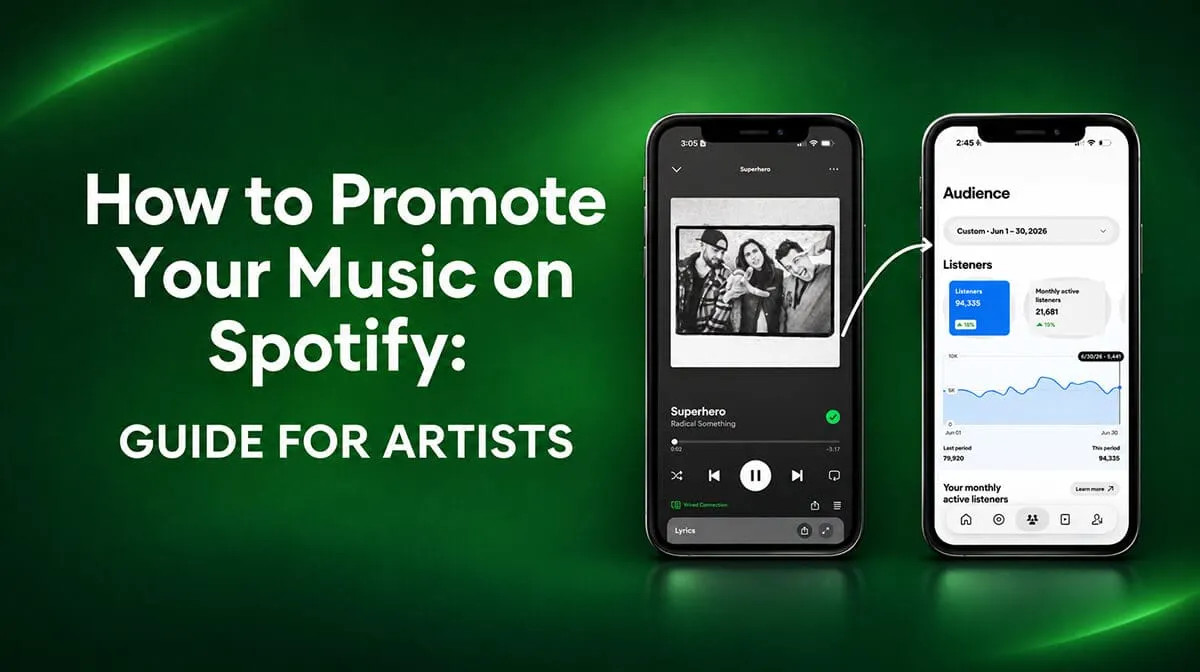
Getting your music on Spotify is only the first step. Reaching new listeners and building an audience requires a promotion strategy.
The most effective way to promote your music on Spotify is to combine playlist pitching, social media marketing, Spotify for Artists tools, fan engagement, and targeted promotion.
You don't need a massive budget or an existing fanbase to get started, but you do need a plan.
This guide walks you through a practical 60-day Spotify promotion strategy, covering the 30 days before release and the first 30 days your song is live.
You'll learn how to promote your music for free, when paid promotion makes sense, how to reach relevant listeners, and how to measure your results.
Already released your music? You'll also find strategies for promoting existing songs and growing your audience.
How to Promote Your Music on Spotify: 7 Essential Strategies
Successful Spotify promotion typically combines several methods rather than relying on a single tactic. Here are seven essential strategies every independent artist should know.
1. Optimize Your Spotify for Artists Profile
Update your artist photos, bio, social links, and Artist Pick. A complete profile helps new listeners discover more about you and explore your music.
2. Pitch Your Music to Spotify Editorial Playlists
Submit eligible unreleased music through Spotify for Artists. Pitching at least seven days before release also helps ensure your selected song appears in your followers' Release Radar playlists. Editorial placement is not guaranteed.
3. Submit Your Music to Independent Spotify Playlists
Research active playlists that match your genre and submit your music to relevant curators. Prioritize authentic audiences and musical fit over playlist follower counts.
4. Promote Your Music on Social Media
Use TikTok, Instagram, YouTube, and other platforms to introduce your songs to potential listeners through short-form videos, performances, behind-the-scenes content, and collaborations.
5. Encourage Genuine Listener Engagement
Saves, follows, playlist adds, and repeat listening can indicate whether people are connecting with your music. Focus on building an audience that wants to keep listening.
6. Use Paid Music Promotion Strategically
Advertising, creator partnerships, and legitimate playlist promotion services can expand your reach. Start with a clear objective and evaluate results before increasing your budget.
7. Track Your Results and Adjust Your Strategy
Use Spotify for Artists to monitor listeners, streams, playlist activity, and audience demographics. Identify what's working and use those insights to improve future promotion.
These strategies work best when combined into a coordinated campaign.
Your 60-Day Spotify Promotion Timeline
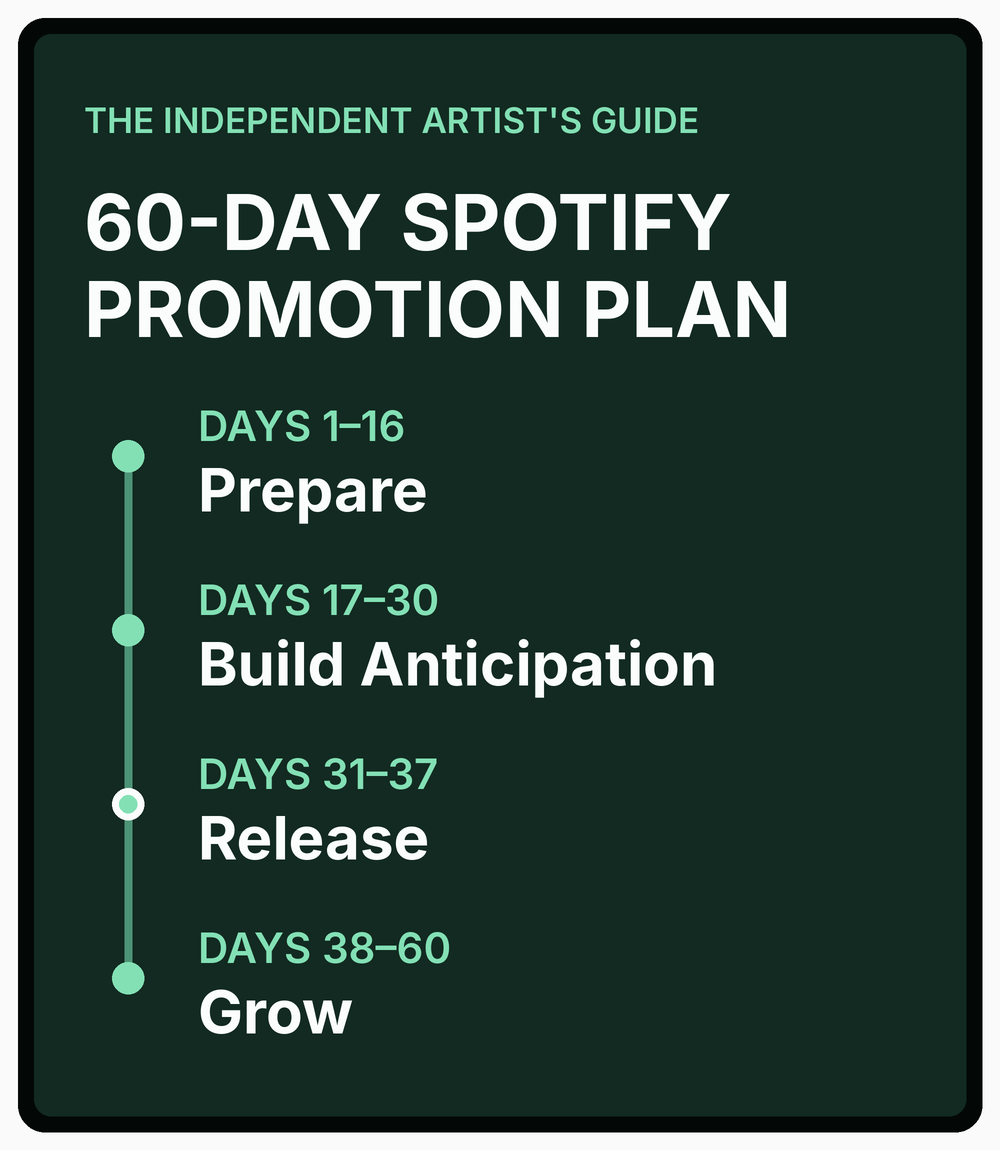
One of the biggest mistakes artists make is waiting until release day to start promoting their music. Just as importantly, promotion shouldn't stop after the first week.
This 60-day plan covers the entire process, from preparing your release to building momentum after your song goes live.
The first 30 days focus on pre-release preparation and promotion. Day 31 is your official release day, followed by 30 days of post-release promotion, including release day.
| Timeline | Phase | Main Focus |
|---|---|---|
| Days 1–16 | Build Your Foundation (Pre-Release) | Prepare your music, profile, content, and marketing strategy |
| Days 17–30 | Build Anticipation (Pre-Release) | Pitch playlists, share previews, and generate interest |
| Days 31–37 | Launch Your Music (Release Week) | Promote your release and engage listeners |
| Days 38–60 | Keep Growing (Post-Release) | Reach new audiences, analyze results, and maintain momentum |
Think of this as a flexible framework rather than a rigid schedule. If you need additional time to finish your music or arrange distribution, start earlier.
If your song is already available on Spotify, skip the preparation steps and focus on the promotion strategies most relevant to your goals.
Days 1–16: Build Your Foundation (Pre-Release)
The first phase is about getting everything ready before actively promoting your release.
You'll choose the right song, define your goals, prepare your music for distribution, optimize your Spotify profile, and create promotional content.
Choose the Right Song to Promote
Before planning your campaign, make sure you have a finished song you're confident in.
Not every track needs a full promotional campaign. If you have multiple songs to choose from, prioritize one with strong potential to connect with listeners.
Does it have a memorable hook, compelling melody, or something that makes people want to listen again?
Consider getting honest feedback from a few trusted listeners before committing your promotional budget.
Finally, make sure your song is fully recorded, mixed, and mastered. Promotion can help people discover your music, but it can't make up for a song that isn't ready for release.
Choose Your Promotion Goals and Target Audience
Before promoting your music, decide what you want to accomplish.
Are you trying to reach your first 1,000 streams, attract new listeners, grow your Spotify followers, or expand into new markets?
Choose one primary objective and a few supporting metrics.
| Campaign Goal | Metrics to Track |
|---|---|
| Reach new listeners | Listeners, sources of streams, audience locations |
| Increase engagement | Saves, playlist adds, streams per listener |
| Grow your Spotify audience | Followers, listener trends |
| Expand into new markets | Listeners by city and country |
| Evaluate paid promotion | Campaign costs, clicks, and Spotify performance trends |
Remember that streams alone don't tell the whole story. A smaller group of engaged listeners who return to your music may be more valuable over time than a large number of one-time plays.
Identify Your Ideal Listener
Think about who is most likely to enjoy your music.
Start by identifying three to five similar artists. Consider their genres, audiences, and the types of playlists their music appears on.
For example, an indie rock artist might target listeners who follow alternative rock playlists, attend indie concerts, and discover new music through TikTok or Instagram.
Understanding your ideal audience will help guide your content, playlist outreach, collaborations, and advertising.
Establish Your Budget
Decide how much you can realistically spend promoting your release.
A $0 budget can still support a meaningful campaign through organic content, Spotify editorial pitching, collaborations, and direct fan outreach.
If you have money available, you can explore advertising, creator partnerships, and other paid promotional opportunities.
We'll compare free and paid Spotify promotion methods, including example budgets, later in this guide.
Distribute Your Music and Prepare for Release
Spotify doesn't accept direct audio uploads from independent artists. You'll need a music distributor to deliver your songs to the platform.
Popular distributors include DistroKid, TuneCore, CD Baby, and LANDR. Each has different pricing, features, and policies.
Spotify also provides an official directory of music distributors.
Set Your Release Date
Choose a release date that gives you enough time for distribution, playlist pitching, and marketing.
Ideally, your music should be delivered and visible in Spotify for Artists before the final two weeks of your campaign.
This gives you time to pitch your song to Spotify editors, resolve potential issues, and prepare your promotional activities.
Prepare Your Release Materials
Before submitting your music, make sure you have:
- Final mastered audio files.
- Album or single artwork.
- Accurate song titles and artist names.
- Featured artist, songwriter, and producer credits.
- Your release date.
- Any required metadata.
If you already have a Spotify artist profile, provide your artist URI or URL to your distributor to help ensure your music appears on the correct profile.
Once your distributor delivers your release, check for it in Spotify for Artists under Music > Upcoming.
Optimize Your Spotify Artist Profile
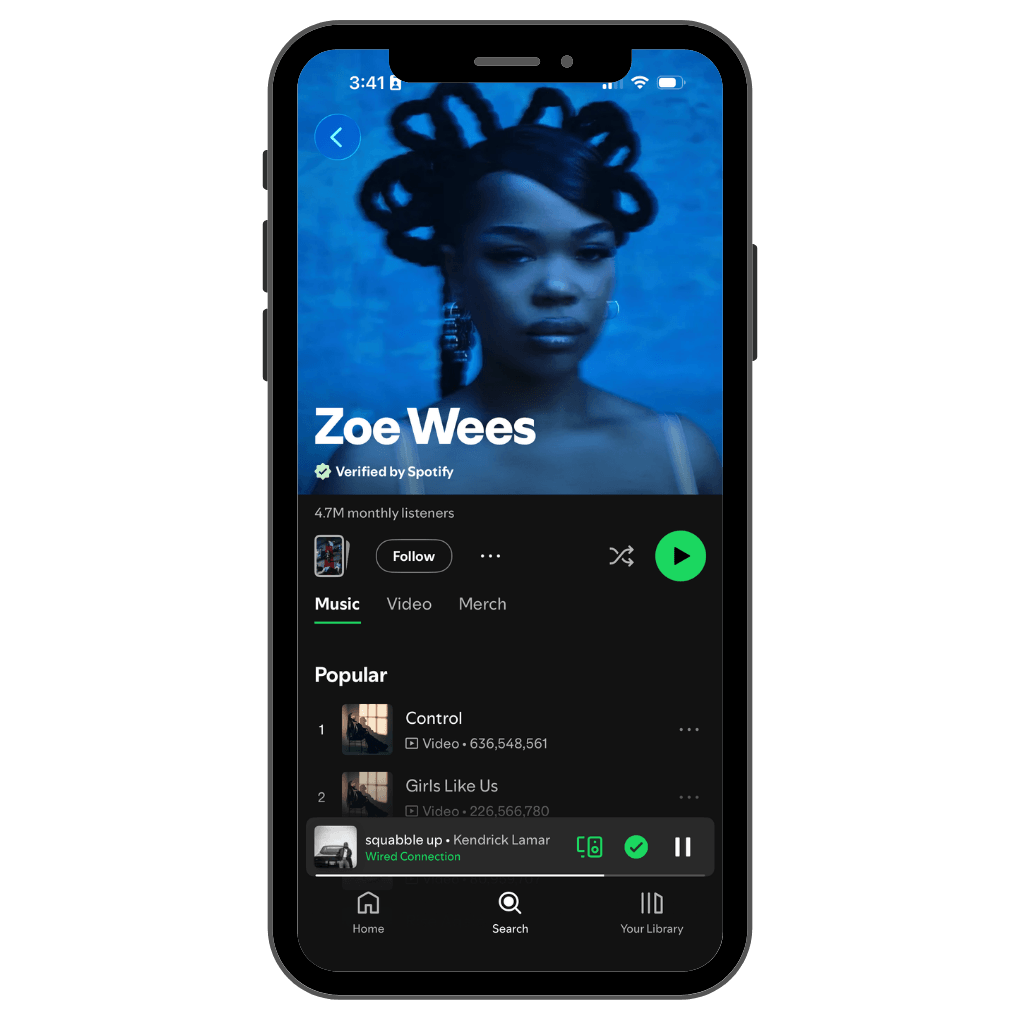
Your Spotify profile is where interested listeners can learn more about you and explore your catalog.
If you haven't claimed your profile, follow our guide on how to claim your artist page on Spotify, Apple Music, and other streaming services.
Once you have access, focus on these essentials.
Update Your Artist Images and Bio
Choose professional images that reflect your music and visual identity.
Write a compelling artist bio explaining your sound, influences, and background. Spotify allows bios of up to 1,500 characters, but a few engaging paragraphs are usually enough.
Avoid generic descriptions. Give listeners something memorable about your music.
Choose Your Artist Pick
Artist Pick lets you highlight eligible music, playlists, and other content near the top of your profile.
Before release, consider featuring a previous song or playlist. Once your new track is live, update your Artist Pick to showcase it.
Add Social Links and Feature Your Music
Connect your social media profiles so listeners can follow you beyond Spotify.
If you have an existing catalog, consider creating a playlist featuring your songs alongside complementary music.
Prepare Your Spotify Canvas
Spotify Canvas allows artists to add a 3–8 second looping visual to tracks in the mobile listening experience.
Create a vertical video using performance footage, music video clips, or other visuals that complement your song.
You can prepare your Canvas before release and upload it when your track becomes available in Spotify for Artists.
Create Your Music Promotion Content
Preparing promotional content ahead of time makes it easier to stay consistent throughout your campaign.
You don't need dozens of expensive videos. Focus on creating several different ways for people to discover and connect with your music.
Create Short-Form Videos
TikTok, Instagram Reels, and YouTube Shorts can introduce your songs to potential listeners.
Try creating content around:
- The strongest section of your song.
- The story behind the lyrics.
- Behind-the-scenes studio footage.
- Live or acoustic performances.
- The inspiration behind your music.
- Relatable moments that connect naturally to your song.
Experiment with different openings, or hooks, to see what captures attention.
For example, one video might start with a powerful vocal moment, while another begins with a story about how the song was written.
Prepare Content for Each Stage of Your Release
| Stage | Content Ideas |
|---|---|
| Pre-Release | Song teasers, studio footage, announcements, pre-save reminders |
| Release Week | Performance clips, release announcements, lyric videos, collaborator posts |
| Post-Release | Acoustic versions, behind-the-scenes stories, alternate videos, audience reactions |
You don't need to publish everything immediately. Having a library of content ready allows you to stay consistent and build on what performs best.
Set Up Your Pre-Save or Smart Link
A pre-save link allows interested listeners to save your upcoming music before its release.
Depending on the service, listeners can authorize the track to be added to their Spotify library when it becomes available.
This gives fans a simple action to take during your pre-release campaign.
Spotify Countdown Pages
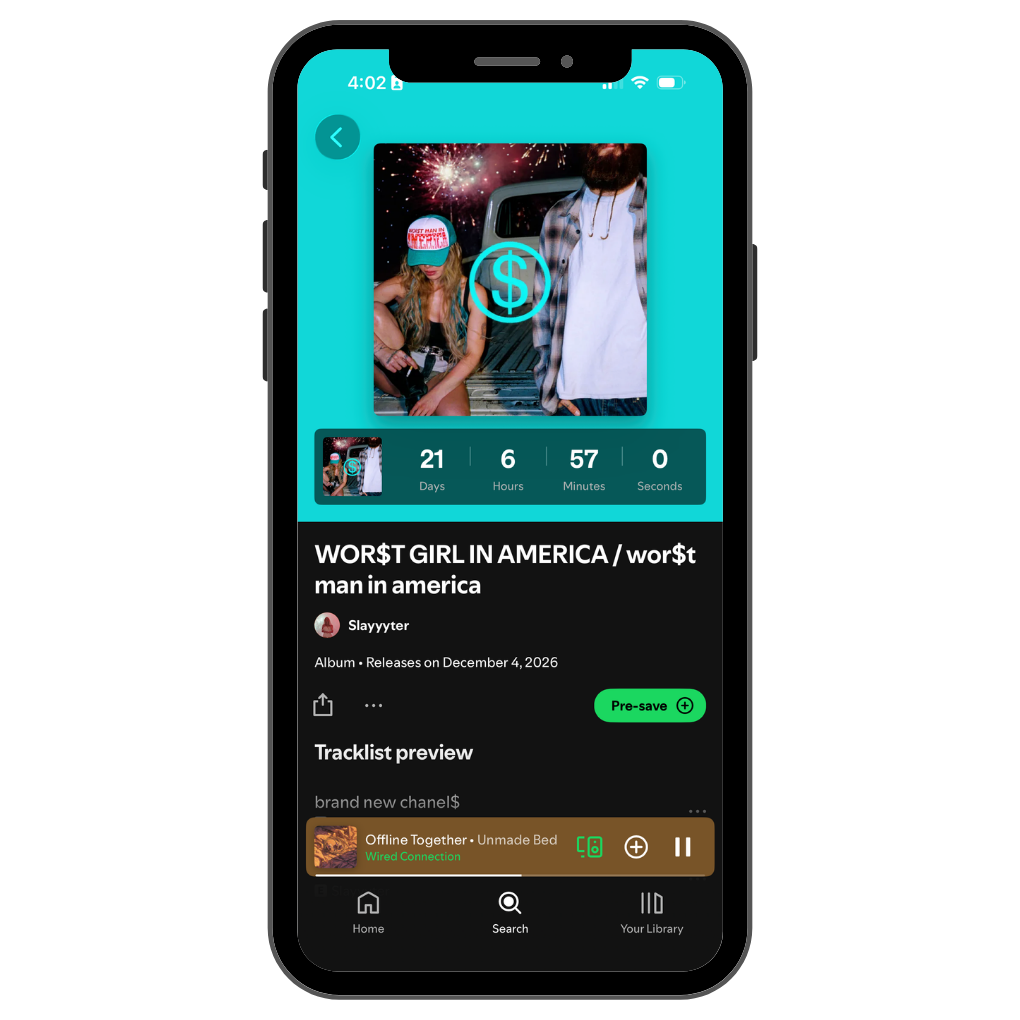
Spotify offers Countdown Pages for eligible upcoming albums and EPs.
These pages allow fans to pre-save releases, explore tracklists, and view available promotional content.
Countdown Pages are not available for standalone singles, and artists must meet Spotify's eligibility requirements, including a monthly active listener threshold.
Check Spotify's official Countdown Pages guide for the latest requirements.
Third-Party Pre-Save and Smart Links
Services such as Feature.fm, Linkfire, and Hypeddit offer pre-save links and music marketing tools.
Smart links can also direct listeners to your music across multiple streaming platforms once it's released.
Choose a service that fits your needs, keep the process simple, and test your links before sharing.
Pre-saves can support your release strategy, but they don't guarantee streams or algorithmic promotion.
Days 1–16: Your Preparation Checklist (Pre-Release)
Before moving into the next phase, make sure you've completed these essential tasks.
- Choose a finished song you're confident promoting.
- Define your promotion goals and target audience.
- Establish your promotional budget.
- Deliver your music through a distributor.
- Confirm your release date, artwork, and metadata.
- Claim and optimize your Spotify for Artists profile.
- Prepare your artist images, bio, Artist Pick, and Canvas.
- Create short-form videos and promotional content.
- Set up and test your pre-save or smart link.
- Confirm your upcoming release is available in Spotify for Artists in time for editorial pitching.
With your foundation in place, it's time to start building anticipation.
The next phase focuses on pitching playlists, sharing previews, and getting your music in front of potential listeners before release day.
Days 17–30: Build Anticipation (Pre-Release)
With your music, artist profile, and promotional content ready, it's time to build interest in your upcoming release.
The final two weeks before release are especially important for pitching Spotify playlists, introducing your song to potential fans, and preparing for launch day.
Your goal is to reach listeners who are likely to enjoy your music and give them a reason to listen when it goes live.
Pitch Your Song to Spotify Editorial Playlists
One of the best free ways to promote an upcoming release is through Spotify's official playlist pitching tool.
Spotify allows artists to submit eligible unreleased music directly to its editorial team through Spotify for Artists. Editors consider submissions for playlists based on factors such as genre, mood, musical style, and audience fit.
There's no cost to submit, and you don't need a large following to be considered.
How to Submit Your Music to Spotify Editorial Playlists
- Log in to Spotify for Artists.
- Navigate to Music > Upcoming.
- Select the unreleased song you want to pitch.
- Click the option to pitch your song to playlist editors.
- Complete the form with your song's genre, mood, instrumentation, and background.
- Submit your pitch before your release date.
Spotify allows one active unreleased song pitch at a time. If you're releasing an EP or album, choose the track you believe has the strongest potential.
When Should You Pitch Your Music?
Spotify recommends pitching at least two weeks before release. Submitting at least seven days in advance also helps ensure your selected song appears in your followers' Release Radar playlists.
Release Radar is a personalized Spotify playlist that introduces listeners to new music from artists they follow or may enjoy.
For this 60-day plan, aim to submit your editorial pitch on Day 17, and no later than Day 24 to meet the seven-day deadline.
Editorial placement isn't guaranteed, but submitting early gives editors more time to consider your music.
How to Write an Effective Spotify Playlist Pitch
Your pitch should help editors understand what makes your song distinctive and where it might fit.
Include:
- Genre, subgenre, and musical influences.
- Mood, energy, and instrumentation.
- The story or inspiration behind the song.
- Relevant promotional plans.
Be specific rather than using generic claims about how great your music is.
For example:
This upbeat indie pop track features warm synthesizers, driving drums, and a melodic vocal hook. It combines nostalgic production with modern alternative pop influences and will be supported by short-form performance videos and social media promotion.
Give editors useful information without exaggerating your achievements or making unrealistic claims.
For more information, see Spotify's official playlist pitching guide.
Submit Your Music to Independent Spotify Playlist Curators
Spotify editorial playlists aren't your only opportunity to reach new listeners.
Independent playlist curators manage their own playlists, often focusing on specific genres, moods, and listening experiences.
Getting your music onto relevant playlists can introduce your songs to listeners who already enjoy your style.
Unlike editorial pitching, independent playlist submissions don't follow one universal process. Some curators accept direct submissions, while others use dedicated platforms.
Find Playlists That Match Your Music
Search Spotify for playlists related to your genre, mood, and similar artists.
For example, an indie folk artist might search for "Indie Folk," "Acoustic Indie," or "Chill Folk."
When evaluating playlists, consider:
- Whether the songs match your musical style.
- How frequently the playlist is updated.
- Whether the curator appears active.
- Whether the audience and follower growth appear authentic.
A smaller playlist with engaged listeners who enjoy your genre can be more valuable than a large playlist with an unrelated audience.
How to Submit Unreleased Music to Playlist Curators
Some independent curators accept unreleased music, allowing artists to pitch before launch day. Others only accept songs already available on Spotify.
For pre-release submissions, you may need to provide a private listening link instead of a public Spotify URL.
Keep your pitch brief and personalized. Introduce yourself, describe your song, explain why it fits the playlist, and include the appropriate link.
Avoid generic mass submissions and services promising guaranteed placements or streams. Spotify prohibits paid guaranteed placements and artificial streaming activity.
Focus on legitimate services and curators who independently decide which songs belong on their playlists.
Start Promoting Your Upcoming Song on Social Media
Social media can help potential fans discover your music before it's available on Spotify.
Use TikTok, Instagram Reels, YouTube Shorts, and Stories to share previews of your upcoming release.
Experiment with different content, including:
- The chorus or strongest hook.
- A memorable lyric or instrumental section.
- Live or acoustic performances.
- Behind-the-scenes recording footage.
- The story or inspiration behind your song.
Pay attention to which videos generate genuine interest, such as comments, shares, and questions about your release date.
Rather than posting the same announcement repeatedly, give people different reasons to connect with your music.
Promote Your Pre-Save Link
Once you've introduced your upcoming release, make it easy for interested listeners to pre-save it.
Add your pre-save link to your social profiles and share it through relevant posts, Stories, emails, and messages.
Focus on people who have already shown interest rather than repeatedly asking everyone to pre-save.
Pre-saves can help organize your launch, but they shouldn't be your only measure of pre-release success.
Activate Your Existing Fans and Collaborators
Your existing audience is one of the best places to build early momentum, even if it's relatively small.
Share your upcoming release with:
- Instagram, TikTok, and YouTube followers.
- Email and text subscribers.
- Fans who regularly engage with your music.
- Friends and personal connections who support your work.
- Collaborating artists, producers, and creators.
If you have an email list, send a short announcement introducing the song, explaining its significance, and sharing the release date.
Coordinate with collaborators by providing artwork, song clips, promotional links, and release-day information they can easily share.
You can also reach out to content creators whose audiences fit your music. Prioritize relevance and genuine interest over follower counts.
A few thoughtful promotional messages are generally better than overwhelming your audience with constant reminders.
Days 17–30: Your Final Two-Week Promotion Schedule
Use this schedule to organize your final two weeks before release.
| Days | What to Do |
|---|---|
| Days 17–21 | Submit your Spotify editorial pitch, begin independent playlist outreach, announce your release, and share song previews |
| Days 22–25 | Share additional teasers, promote your pre-save link, contact collaborators, and identify your strongest content |
| Days 26–28 | Continue reaching potential listeners, coordinate promotional posts, and prepare release-day materials |
| Days 29–30 | Share final reminders, check your links and release details, and prepare for launch |
You don't need to follow every activity on an exact day. The goal is to build anticipation while making sure you're ready when your music becomes available.
By Day 30, you should have completed your editorial pitch, started relevant playlist outreach, introduced your song to potential listeners, and prepared your release-day content.
On Day 31, your song goes live.
Days 31–37: Launch Your Music (Release Week)
Day 31 is release day. Your song is officially available on Spotify, and it's time to turn your preparation into real listeners and engagement.
The first week is your opportunity to introduce your music to new audiences, reconnect with existing fans, and identify which promotional efforts are working.
Rather than focusing entirely on release day, aim to maintain momentum throughout the week.
Complete Your Spotify Release-Day Checklist
Before announcing your release, make sure everything is working correctly.
- Confirm your song is live on the correct Spotify artist profile.
- Check the audio, artwork, title, and credits.
- Test your Spotify link and update your pre-save or smart links.
- Update your Artist Pick to feature your new release.
- Confirm your Spotify Canvas is active.
- Add the song to relevant playlists you manage.
- Update your social media profiles with your release link.
If you notice incorrect metadata or distribution issues, contact your distributor as soon as possible.
You can also use Spotify Promo Cards to create shareable graphics for your release.
Promote Your Release to Your Existing Audience
Start by sharing your new music with people who already know and enjoy your work.
Announce your release on Instagram, TikTok, YouTube, and other platforms where you have an audience. Email your subscribers, contact collaborators, and personally reach out to supporters who have shown interest in your music.
Rather than simply posting "My new song is out," share something meaningful about the release.
For example:
My new song is finally out! I wrote this during a difficult time, and it means a lot to share it. If you've ever experienced something similar, I think you'll connect with it.
Personal stories give listeners a reason to care about your music beyond the release announcement.
Encourage Saves, Follows, and Shares
Getting streams is important, but building an audience that continues listening is the bigger opportunity.
Encourage interested listeners to save your song, follow your Spotify profile, or add your track to their playlists.
Keep your calls to action natural:
If you're into the song, save it to your library so you can come back to it.
Saves, follows, and repeat listening can help indicate whether listeners are connecting with your music.
Avoid artificial engagement tactics or encouraging people to stream repeatedly just to increase numbers. Focus on genuine interest from real listeners.
Keep Promoting With Different Types of Content
One release announcement won't reach everyone who might enjoy your music.
Throughout release week, continue sharing different types of content, including:
- Performance videos featuring your song's strongest section.
- Lyric videos highlighting memorable lines.
- Behind-the-scenes recording footage.
- Acoustic or alternate performances.
- Stories about the inspiration behind your song.
- Collaborator content and genuine audience reactions.
Pay attention to what generates meaningful engagement.
If a performance video performs particularly well, try another version with a different opening or setting.
You don't need completely new ideas every day. Build on what's already working.
Monitor Your First-Week Spotify Performance
Use Spotify for Artists to understand how listeners are responding to your release.
Focus on these key metrics:
| Metric | What It Tells You |
|---|---|
| Streams | Total times your song has been streamed |
| Listeners | Number of unique listeners |
| Saves | How often listeners save your music |
| Playlist Adds | How often listeners add your song to playlists |
| Followers | Whether your Spotify audience is growing |
| Sources of Streams | Where listeners are discovering your music |
Spotify provides a live stream count for new releases during their first seven days, while most other statistics update daily.
Look for patterns rather than focusing on individual numbers.
For example, if your song receives many streams but relatively few saves or repeat listens, consider whether your promotion is reaching the right audience.
If a particular social media video performs well alongside increased Spotify activity, test similar content, while recognizing that the timing doesn't establish a direct connection.
Avoid making major decisions based on your first 24 hours. Give your campaign time to generate useful data.
Days 31–37: Your Release-Week Promotion Schedule
Use this seven-day schedule to organize your release-week activities.
| Day | What to Do |
|---|---|
| Day 31 | Confirm your release is live, update Artist Pick, announce your song, and share your Spotify link |
| Day 32 | Share a performance or lyric video featuring your song's strongest section |
| Day 33 | Tell the story behind your release and engage with your audience |
| Day 34 | Share collaborator content and continue relevant playlist outreach |
| Day 35 | Review your strongest content and create a variation of what's working |
| Day 36 | Share a different creative angle, such as an acoustic performance or behind-the-scenes video |
| Day 37 | Review your first-week results and identify your most effective promotional activities |
Treat this as a flexible schedule, not a requirement to post every day.
By Day 37, you should have a clearer understanding of how listeners are responding to your music and which promotional strategies deserve more attention.
The next phase focuses on using those insights to reach new audiences and maintain momentum beyond release week.
Days 38–60: Keep Growing Your Audience (Post-Release)
Your song has been out for a week, but your promotion campaign is far from over.
Many artists focus heavily on release week and move on too quickly. In reality, songs can continue reaching new listeners for months or even years after release.
The final 23 days of this plan focus on identifying what's working, expanding your reach, and turning new listeners into long-term fans.
Identify What's Working
Start by reviewing your first-week results in Spotify for Artists. Look beyond total streams to understand where listeners are coming from and how they're engaging with your music.
Focus on these metrics:
- Sources of streams: Are listeners discovering your music through playlists, recommendations, or their own libraries?
- Saves and playlist adds: Are people interested in hearing your music again?
- Audience locations: Which cities and countries are responding to your release?
- Streams per listener: Are listeners playing your song more than once?
- Audience segments: Are you attracting listeners who actively seek out your music?
Spotify for Artists distinguishes between active sources, where listeners intentionally choose your music, and programmed sources, such as playlists and algorithmic recommendations.
Use these insights to guide your next steps. For example, if a playlist generates streams but little repeat listening, consider whether it's reaching the right audience.
Continue Pitching to Independent Spotify Playlists
Spotify editorial pitching is limited to unreleased music, but you can continue submitting released songs to independent playlist curators.
Focus on playlists that match your genre, mood, and audience.
As you continue outreach:
- Research new playlists relevant to your music.
- Personalize your submissions.
- Follow each curator's submission instructions.
- Track your pitches and responses.
- Evaluate playlist quality and audience relevance.
A smaller playlist with interested listeners can be more valuable than a large playlist with an unrelated audience.
Avoid services promising guaranteed placements or streams.
Expand Your Best-Performing Content
By this stage, you should have a better idea of which social media content generates interest in your music.
Instead of constantly creating new concepts, build on your strongest videos.
For example, if an acoustic performance performed well on Instagram, try another version with a different opening, camera angle, or section of the song.
You can also experiment with:
- Alternate performances and remixes.
- Collaborations with relevant creators.
- Lyric-focused videos.
- Behind-the-scenes footage.
- Fan-generated content shared with permission.
The goal is to find repeatable ways to introduce your music to new listeners without posting the same promotion repeatedly.
Test Paid Spotify Promotion if Your Budget Allows
If your organic promotion is generating interest, consider testing paid methods to reach a larger audience.
Common options include:
- Social media advertising: Run targeted ads on Instagram, Facebook, or TikTok using videos that have already performed well.
- Creator partnerships: Collaborate with creators whose audiences are likely to enjoy your music.
- Independent playlist promotion: Use legitimate services that connect artists with curators who independently decide which songs to feature.
- Spotify promotional tools: Eligible artists can use Marquee and Showcase to reach relevant listeners directly on Spotify.
Start with a small test before increasing your budget.
Track spending, clicks, and Spotify performance trends to evaluate whether your promotion is reaching interested listeners. Remember that clicks don't necessarily translate into streams, and not every change in listening activity can be attributed to a specific campaign.
We'll compare paid promotion options and example budgets later in this guide.
Introduce New Listeners to Your Existing Music
A successful release can introduce people to your entire catalog, not just one song.
Make it easy for interested listeners to discover more of your music.
Consider:
- Creating an artist playlist featuring your songs alongside complementary tracks.
- Using Artist Pick to highlight relevant releases.
- Sharing older songs that connect to your newest track.
- Creating content that introduces listeners to your musical journey.
- Encouraging fans to follow your Spotify profile.
The goal is to turn interest in one release into an ongoing relationship with your audience.
Review Your Results and Plan Your Next Release
At the end of Day 60, compare your results with the goals you established at the beginning of the campaign.
Review your listeners, streams, saves, followers, playlist activity, and promotional spending.
Ask yourself:
- Which promotion methods reached the most relevant listeners?
- What content generated the strongest engagement?
- Did listeners save your music or explore other releases?
- Which activities were worth your time and money?
- What would you change for your next campaign?
Success isn't just about reaching a particular stream count. Building an engaged audience and identifying strategies that work can provide value long after your campaign ends.
Days 38–60: Your Post-Release Promotion Schedule
| Days | What to Do |
|---|---|
| Days 38–44 | Review first-week analytics, continue playlist outreach, and identify your strongest content |
| Days 45–51 | Test new versions of successful content, explore collaborations, and consider paid promotion |
| Days 52–57 | Continue reaching new listeners, introduce fans to your catalog, and evaluate results |
| Days 58–60 | Review campaign performance, identify lessons learned, and plan your next release |
Treat this as a flexible schedule. Continue investing in strategies that show promise and adjust those that aren't producing meaningful results.
Remember, Day 60 isn't the deadline for your song to succeed.
Spotify has reported that approximately 75% of a release's first-year streams occur after its first month, based on an analysis of qualifying releases.
The takeaway is simple: Don't abandon your music after release week. Consistent promotion and a focus on reaching the right listeners can help your music continue growing long after launch.
How to Promote Your Music on Spotify for Free
You don't need a large budget to promote your music on Spotify. Independent artists can use several free methods to reach new listeners and grow their audience.
Here are six effective ways to promote your music on Spotify for free:
- Pitch Spotify editorial playlists: Submit eligible unreleased songs through Spotify for Artists at no cost.
- Optimize your artist profile: Update your bio, photos, Artist Pick, and social links to help listeners discover your music.
- Create social media content: Share performances, song previews, and behind-the-scenes videos on TikTok, Instagram, and YouTube.
- Submit to independent playlists: Find relevant curators who accept free submissions.
- Collaborate with other artists: Reach new audiences through musicians and creators with similar listeners.
- Engage your existing fans: Use email, social media, and personal connections to share your releases.
Free promotion requires time and consistent effort, but it can help you discover what resonates before investing in paid campaigns.
How Much Does Spotify Music Promotion Cost?
Spotify music promotion can cost anywhere from $0 to thousands of dollars, depending on your goals and the methods you choose.
There's no required promotional budget, and spending money doesn't guarantee streams or playlist placements.
Free vs. Paid Spotify Promotion
| Promotion Method | Typical Cost | Best For |
|---|---|---|
| Spotify editorial pitching | Free | Unreleased music |
| Organic social media | Free | Building awareness and engagement |
| Independent playlist outreach | Free or variable | Reaching genre-specific listeners |
| Social media advertising | Flexible budget | Reaching targeted audiences |
| Creator partnerships | Free or negotiated fees | Expanding reach through creators |
| Spotify Marquee and Showcase | From $100 for eligible campaigns | Promotion within Spotify |
| Professional music promotion | Varies | Outsourcing promotional activities |
Spotify's Paid Promotional Tools
Spotify offers several promotional options for eligible artists.
Marquee: A sponsored recommendation that helps promote eligible new releases to relevant Spotify listeners.
Showcase: A sponsored recommendation that can promote new releases and older catalog music on Spotify.
Both tools currently have a $100 minimum campaign budget, although eligibility requirements apply.
Discovery Mode: Allows eligible artists to prioritize selected songs in certain personalized listening contexts. Rather than charging an upfront fee, Spotify applies a 30% commission to recording royalties from eligible streams in Discovery Mode contexts.
None of these tools guarantees additional streams. Check Spotify for Artists for current eligibility and availability.
Example Spotify Promotion Budgets
| Budget | Suggested Approach |
|---|---|
| $0 | Editorial pitching, free playlist outreach, organic content, and fan engagement |
| $400 | $250 for targeted advertising and $150 for content creation or creator collaborations |
| $1,000 | $500 for advertising, $250 for creator partnerships, and $250 for content production |
These are illustrative budgets, not guaranteed results. Start with an amount you can comfortably afford, test your approach, and invest more only when the results justify it.
How to Promote a Song That's Already Released on Spotify
You can promote a song on Spotify weeks, months, or even years after its release. Older music can reach new audiences through playlists, social media, collaborations, and advertising.
Here are four ways to revive an existing release:
- Create a new promotional angle: Share an acoustic performance, lyric video, behind-the-scenes story, or fresh content featuring your song.
- Restart playlist outreach: Submit your released music to relevant independent playlist curators. Spotify editorial pitching is limited to unreleased songs.
- Update your Spotify profile: Feature the track through Artist Pick, refresh promotional links, and make it easy for listeners to explore your catalog.
- Test new promotion channels: Experiment with social advertising, creator collaborations, or Spotify Showcase if eligible.
A song doesn't stop being worth promoting simply because its release date has passed. Focus on reaching listeners who haven't discovered it yet.
How to Promote Music on Spotify With No Audience
Every artist starts somewhere. If you have no Spotify followers or monthly listeners, focus on building your first group of genuine fans rather than chasing large stream counts.
Start with these strategies:
- Identify your ideal audience: Find artists, playlists, and communities connected to your genre.
- Share engaging content: Use performances, short-form videos, and stories to introduce your music.
- Collaborate with other musicians: Connect with artists and creators who reach similar audiences.
- Submit to relevant playlists: Focus on legitimate curators who accept music from emerging artists.
- Set realistic goals: Work toward your first 100 genuine listeners, saves, and followers before trying to scale.
You don't need an established fanbase to begin promoting your music. You need a strong song, a clear target audience, and a consistent approach to reaching people.
How to Measure Spotify Music Promotion Success
The best Spotify promotion strategies do more than generate streams. They help you reach listeners who connect with your music and want to hear more.
Spotify for Artists provides free analytics to help evaluate your results.
Key Spotify for Artists Metrics
| Metric | What It Measures |
|---|---|
| Streams | Total plays of your music |
| Listeners | Unique people who listened |
| Streams per listener | Average plays per listener |
| Saves | How often listeners save your songs |
| Playlist adds | How often listeners add your music to playlists |
| Followers | Growth of your Spotify audience |
| Sources of streams | Where listeners discover and play your music |
| Audience segments | How different listener groups engage with your music |
Spotify also distinguishes between active listening, where people intentionally choose your music, and programmed listening through sources such as playlists and recommendations.
How to Tell If Your Promotion Is Working
Look at multiple metrics together rather than judging success by streams alone.
| What You're Seeing | What to Investigate |
|---|---|
| More streams but few saves | Whether you're reaching the right listeners |
| Growing listeners and followers | Whether you're building an ongoing audience |
| Social media views but few Spotify listeners | Whether viewers can easily access your music |
| Playlist streams but little repeat listening | Whether the playlists match your genre |
| Increasing active listeners | Whether more people are intentionally choosing your music |
For paid campaigns, combine Spotify for Artists data with advertising analytics and smart-link tracking.
Remember that changes in Spotify streams cannot always be directly attributed to individual campaigns. Look for consistent trends over time.
Common Spotify Music Promotion Mistakes to Avoid
Avoid these common mistakes when promoting your music:
- Buying streams or guaranteed placements: These schemes can violate Spotify's policies and put your music at risk.
- Targeting the wrong audience: Focus on listeners who genuinely enjoy your genre.
- Waiting until release day: Start early to allow time for playlist pitching and promotion.
- Relying on one strategy: Combine playlists, social content, fan engagement, and other relevant methods.
- Focusing only on streams: Track saves, followers, repeat listening, and audience growth.
- Spending without testing: Evaluate results before increasing your promotional budget.
- Stopping too early: Continue promoting your music when opportunities exist to reach new listeners.
Successful Spotify promotion focuses on authentic discovery and sustainable audience growth rather than shortcuts.
Frequently Asked Questions About Spotify Music Promotion
How can I promote my music on Spotify for free?
You can promote your music for free by optimizing your Spotify for Artists profile, pitching unreleased songs to editorial playlists, submitting to independent curators who accept free pitches, creating social media content, and collaborating with other artists.
How do I promote my music on Spotify without followers?
Start by identifying listeners who enjoy similar artists and genres. Create engaging content, collaborate with relevant musicians, and submit your songs to appropriate playlists. Focus on building a small group of genuine fans before scaling your promotion.
Can you pay Spotify to promote your music?
Yes. Spotify offers paid promotional tools such as Marquee and Showcase for eligible artists. These tools help reach relevant listeners but don't guarantee streams or editorial playlist placements.
How much should I spend promoting a song on Spotify?
There's no required budget. You can start with free promotion methods or test paid campaigns with a modest budget. Choose an amount you can afford and evaluate results before increasing spending.
How do I get my music added to Spotify playlists?
Submit eligible unreleased songs through Spotify for Artists for editorial consideration. For independent playlists, research relevant curators and follow their submission instructions. Neither method guarantees placement.
How long should I promote a song on Spotify?
Start promoting before release and continue afterward. A 60-day campaign provides a useful framework, but songs can attract new listeners for months or years. Continue promoting while you have relevant opportunities and promising results.
Can I promote a song that's already been released?
Yes. Promote older songs through independent playlist submissions, social media content, collaborations, and paid advertising. Eligible artists can also use Spotify Showcase to promote catalog music.
Does Spotify promotion guarantee more streams?
No legitimate promotion method guarantees a specific number of streams or playlist placements. Results depend on your music, audience, targeting, and how listeners respond. Focus on authentic discovery and long-term engagement.
The Key Takeaway: Build an Audience, Not Just Streams
Effective Spotify promotion starts with a strong song, a clear strategy, and consistent effort.
Use the 60-day plan to prepare your release, reach relevant listeners, and build momentum through playlists, social media, fan engagement, and targeted promotion.
Whether you're spending $0 or investing in paid campaigns, focus on building an audience that genuinely enjoys your music.
And remember, promotion doesn't have to stop after 60 days. The ultimate goal isn't just getting more streams on one song. It's creating fans who want to hear your next release.
Looking to Promote Your Music?
Try our Spotify Playlist Pitching and TikTok Music Promotion services.